
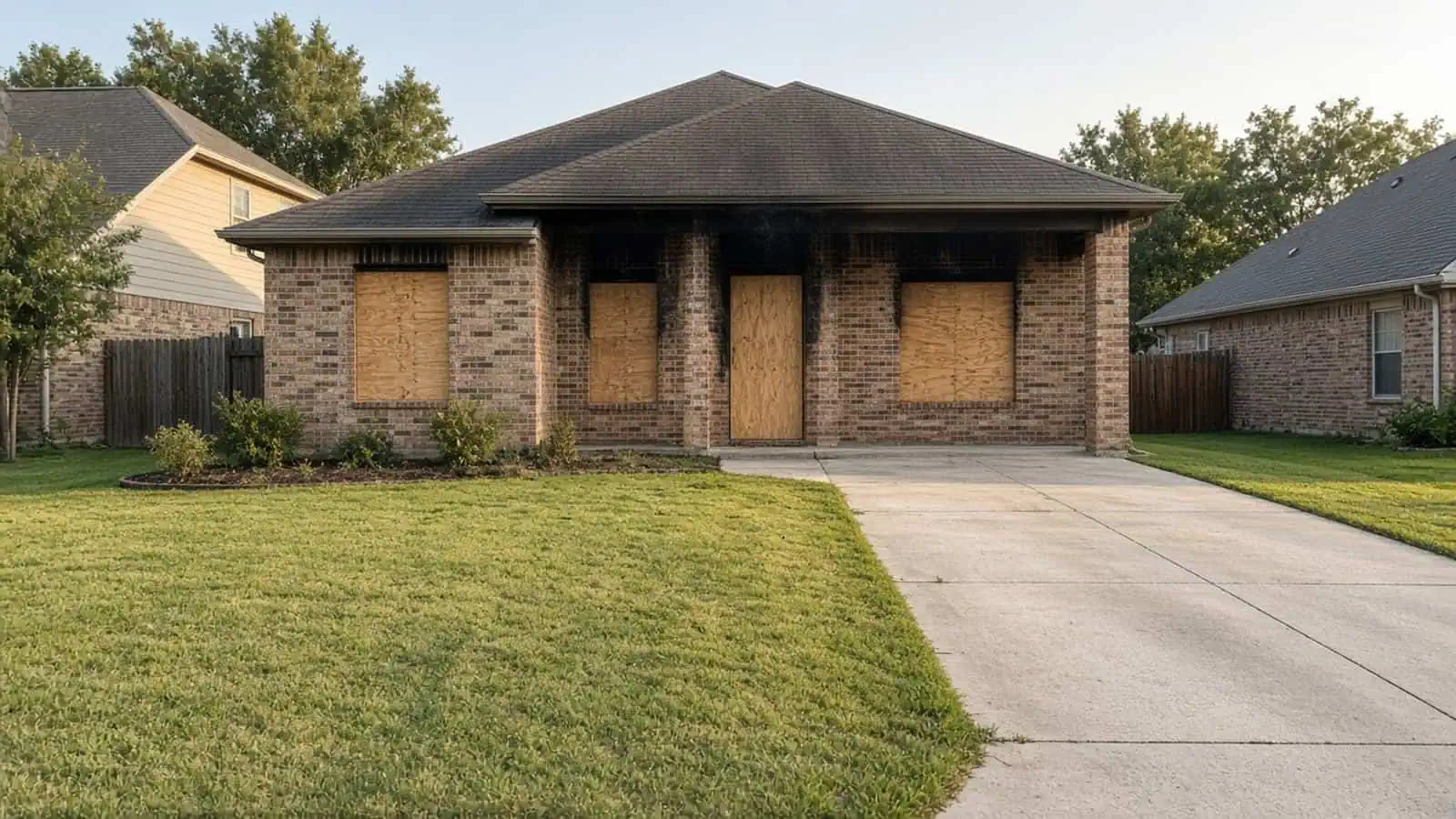
A house fire changes everything. One day you have a home, and the next you are looking at charred walls, a damaged roof and a repair estimate that feels out of reach. If you own a fire-damaged house in Dallas-Fort Worth, you have more options than you might think. You can sell it for cash as-is, skip the repairs and close on a date that works for you and the buyer, without the months a traditional listing can take.
This guide covers what Texas sellers need to know: disclosure, insurance, mortgages, city code notices and how a cash offer is worked out.
Get A Written Offer On Your Fire-Damaged House
We buy fire-damaged homes in DFW as-is, with no repairs or clean-up needed. You get a written offer within 24 hours.
Can You Sell A Fire-Damaged House In Texas?
Yes. Fire damage does not make a property unsellable. A heavily damaged home may not suit the traditional market, where most buyers need a mortgage and lenders want a habitable property, but cash buyers work differently. Many buy homes with structural damage, smoke damage or open code cases.
Texas Property Code §5.008 generally requires the seller of a single-family home to give the buyer a written Seller’s Disclosure Notice, and the statutory form asks specifically about previous fires. Most sellers use the TREC Seller’s Disclosure Notice form. Some transfers are exempt, such as certain foreclosure sales and some estate and trust transfers, so check with a Texas real estate attorney if you are unsure whether the rule applies to you. Either way, telling the buyer what you know protects you from disputes after closing. Cash buyers expect damage when they make an offer, so full disclosure does not put them off the way it might with a buyer looking for a move-in-ready home.
Smoke Damage Vs Fire Damage
Not every fire leaves the same kind of damage, and the difference affects both your options and your offer.
- Smoke damage is soot, staining and odour that can spread through the whole house, including the HVAC ducts, attic insulation and wall cavities, even when the flames stayed in one room. It is often cleanable, but specialist cleaning and deodorising add up.
- Fire damage means burned framing, roof structure, wiring or plumbing. Structural fire damage usually needs an engineer’s assessment and permitted repairs before anyone can live in the home again.
Most fire-damaged houses have both, and the true extent is often only clear once walls and ceilings are opened up.
Water And Mold Damage From Firefighting
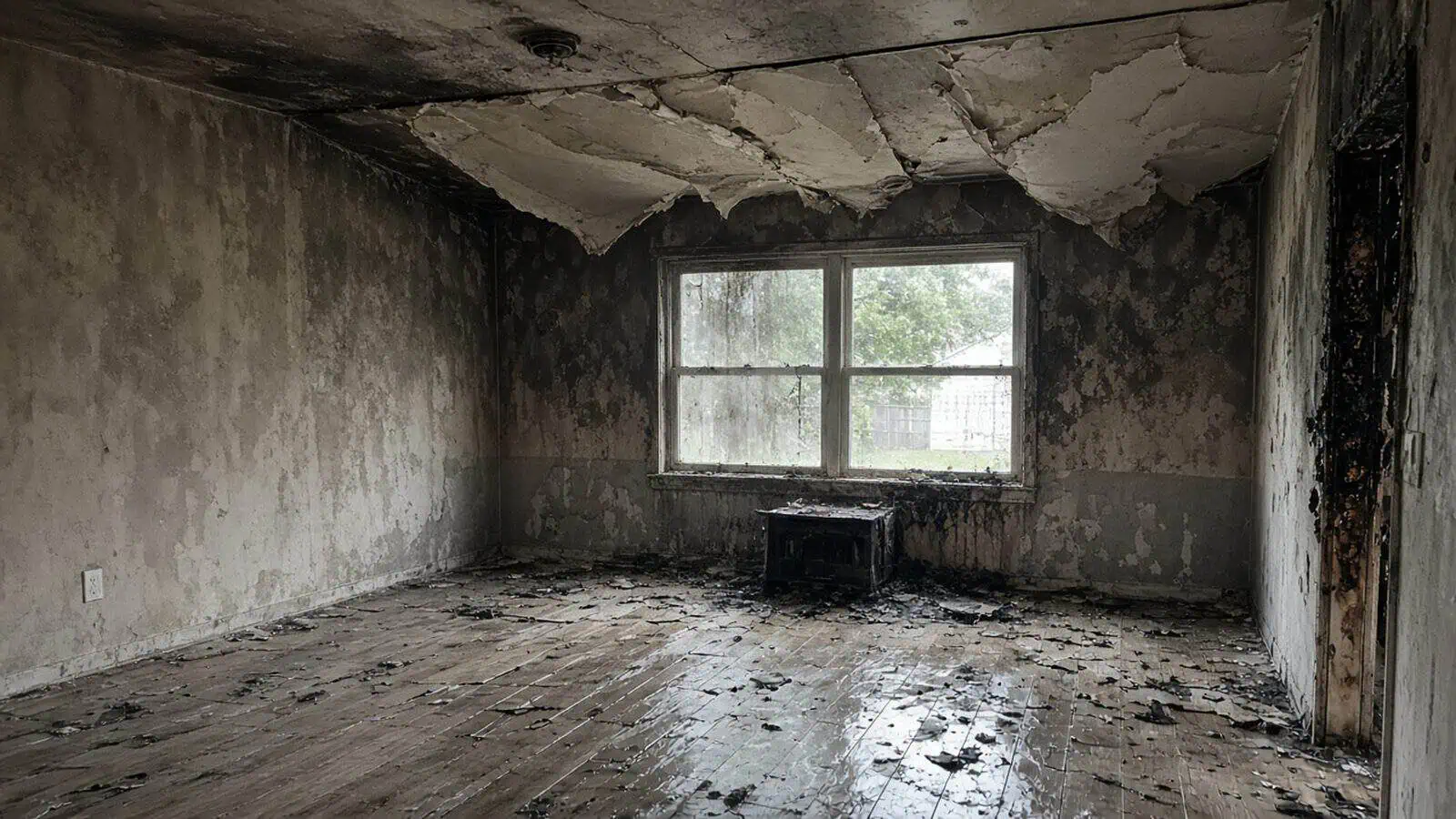
Firefighters can put thousands of gallons of water into a house. That water soaks drywall, insulation, subfloors and cabinets, and in the Texas heat mold can start growing within 24 to 48 hours. Water damage from firefighting is often as costly to fix as the fire itself.
If you can do so safely, ask your insurer whether they will cover water extraction and drying, and photograph everything before anything is removed. If you plan to sell as-is, a cash buyer will price the water and mold remediation into the offer, so you do not need to pay for it first. The EPA’s guide to mold cleanup in your home explains why wet materials need drying or removing quickly.
Securing The Property After A Fire
A damaged, empty house attracts trespassers, scrappers and squatters, and an open roof lets rain in and makes the damage worse. Most insurers expect you to take reasonable steps to prevent further loss.
- Board up broken windows and doors, and tarp any open sections of roof.
- Confirm with the utility companies that gas and electricity are safely shut off, and do not restore them until a licensed professional says it is safe.
- Remove valuables and important documents once the fire department allows access.
- Keep receipts for board-up and securing work, as many policies reimburse these costs.
The Vacancy Risk Many Owners Miss
If you have moved out, check your homeowners policy for a vacancy clause. Many standard policies limit or exclude cover for certain losses, such as vandalism, theft or water damage, once a home has been vacant for a set period, often around 30 to 60 days. If you expect the house to sit empty while you decide what to do, ask your agent whether you need a vacant-home policy. Our guide to selling a vacant house covers keeping an empty property secure. You may also be liable if someone enters an unstable structure and gets hurt.
Why Selling To A Cash Buyer Makes Sense After A Fire
Repairing fire damage is often expensive, and costs tend to grow once contractors open up the walls. Selling to a cash buyer means you do not have to hire contractors, schedule remediation or oversee months of construction.
Cash House Buyers USA has bought homes from Texas homeowners since 2011. The company is based in Irving and works directly with homeowners across the Dallas-Fort Worth metroplex, from Dallas to Fort Worth, rather than through a franchise or national network. Owner Tommy Weisz buys with his own money, so the company does not sign a contract and then assign it to another investor. CHB is rated A+ by the Better Business Bureau and has been BBB accredited since 2019.
No Repairs, No Contractors, No Repair Delays
When you sell to a cash buyer, the property transfers as-is. You are not responsible for fixing the roof, replacing flooring, removing smoke odour or bringing the wiring up to code before the sale.
That matters because the scope of fire repairs is hard to predict. On the traditional market, that uncertainty sits with you: retail buyers often renegotiate or walk away when inspections find more damage. A cash buyer prices the condition into the offer from the start. An offer can still change if significant new information comes to light, such as an undisclosed lien or structural damage that could not be seen at the walkthrough, so share everything you know early.
What Happens To Your Insurance Claim When You Sell

The insurance payout is where many sellers make costly assumptions. What happens depends on your policy, whether you have a mortgage and how far the claim has progressed.
Your Lender Usually Has A Say In The Payout
If you have a mortgage, your lender is almost always named on the policy, so the insurer will usually make the dwelling payment out to both you and the lender. For larger claims, many lenders deposit the money into a loss-draft account and release it in stages as repairs are completed and inspected. If the home is not going to be repaired, the lender may apply the funds to the loan balance instead. The Texas Department of Insurance home insurance guide explains that if you owe money on your home, the repair check is made out to both you and your mortgage company, which usually deposits it and releases money to you as the work is done. Contact your lender’s loss-draft department early to find out how they handle a sale.
Recoverable Depreciation
Many Texas homeowners policies pay replacement cost, but not all at once. The insurer usually pays the actual cash value (ACV) first, which is the cost to repair minus depreciation for the age and condition of the damaged items. The withheld amount, called recoverable depreciation, is normally released only after the repairs are completed, often within a time limit set by the policy.
If you sell the house as-is without repairing it, you will usually forfeit that holdback. This is the real trade-off when deciding whether to sell before or after the claim is settled, so ask your adjuster for the ACV figure and the depreciation holdback in writing before you decide.
Can The Buyer Take Over The Claim?
Sometimes, but it is not automatic. Many homeowners policies contain anti-assignment clauses, and assigning the rights to a claim usually needs the insurer’s consent. In other cases you keep the claim and collect the payout yourself after closing, subject to your lender’s rights. Whatever you agree should be written clearly into the purchase contract, and it is worth talking to a real estate attorney in Texas to make sure the terms are structured correctly.
If your claim is large or disputed, some owners hire a licensed public adjuster to negotiate with the insurer. Public adjusters must be licensed by TDI and, according to the TDI guide to public adjusters, can charge up to 10% of what the insurer pays, so weigh the fee against the time and money at stake.
If The Home Was Uninsured
You can still sell an uninsured fire-damaged home. Without a payout, the sale price is often the main way to recover value from the property, and a cash buyer can close without you having to fund any repairs or clean-up first.
Should You Sell Before Or After The Insurance Payout?
There is no single right answer, but the questions to ask are clear.
- How much is the recoverable depreciation? If it is large and you could realistically complete the repairs, waiting may be worth more to you.
- How quickly is the claim moving? Large claims can take months. If carrying costs, vacancy risk or city deadlines are mounting, selling sooner may leave you better off.
- What will your lender do with the funds? If the lender will apply the payout to the loan, that affects how much you need from the sale.
A cash buyer can talk you through what each path might look like before you commit to anything, but your adjuster, lender and attorney should confirm the numbers.
Selling A Fire-Damaged Home When You Still Owe A Mortgage
An active mortgage does not stop you selling. At closing, the title company uses the sale proceeds to pay off the mortgage and any other liens on the property, such as a home equity loan, unpaid property taxes, HOA dues, a judgment lien or city liens for fines or board-up work. You receive what is left. Read more on whether a Texas house can be sold with a lien on it.
Insurance money and sale money are separate. Any insurance funds your lender holds may already be applied to the loan, which lowers the payoff amount. If the sale price is still below what you owe, you have two main options: bring cash to closing to cover the difference, or ask your lender to approve a short sale, which accepts less than the full balance. A short sale needs written lender approval and takes longer, so start that conversation early.
Code Violations, Condemned Homes And Unsafe Structures
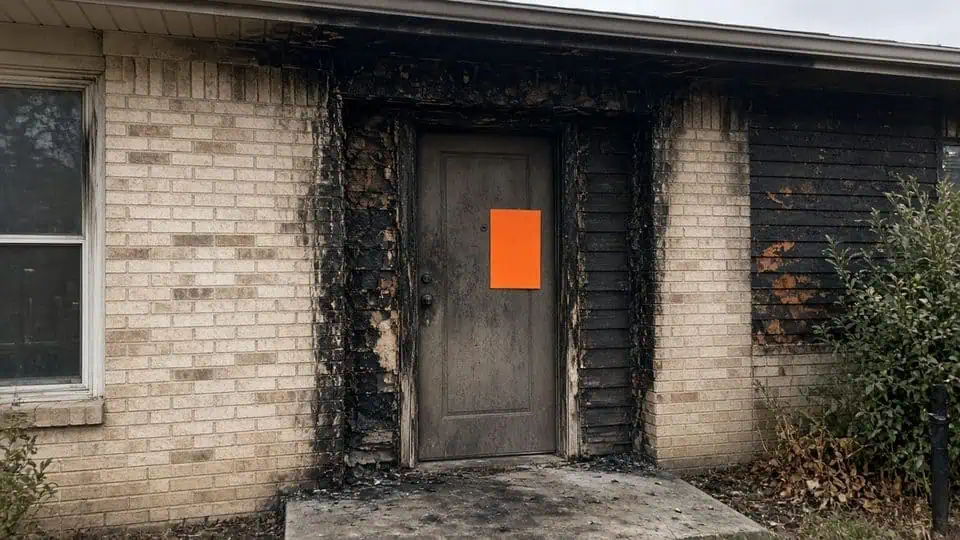
Fire damage often triggers code enforcement. In Dallas, Fort Worth and other DFW cities, the city may issue notices requiring the owner to secure, repair or demolish the property by a deadline, and fines can build if the notices are ignored. Under Texas Local Government Code chapter 214, cities can declare a building dangerous or substandard, order repairs or demolition and place a lien on the property for the cost of work the city carries out.
You may be able to sell without fixing every violation first. Requirements vary by city, though, and some notices, liens or demolition orders can affect the sale or its timing. Disclose every notice you have received, share copies with the buyer and agree how each will be handled before closing.
If the home has been condemned or ordered vacated, it can still be sold, but the buyer needs to know the exact status and deadlines. Do not let deadlines pass while you decide. Missing a hearing or a compliance date can lead to more fines, a city lien or a demolition order, all of which reduce what you take home.
Total Loss Vs Selling As A Lot
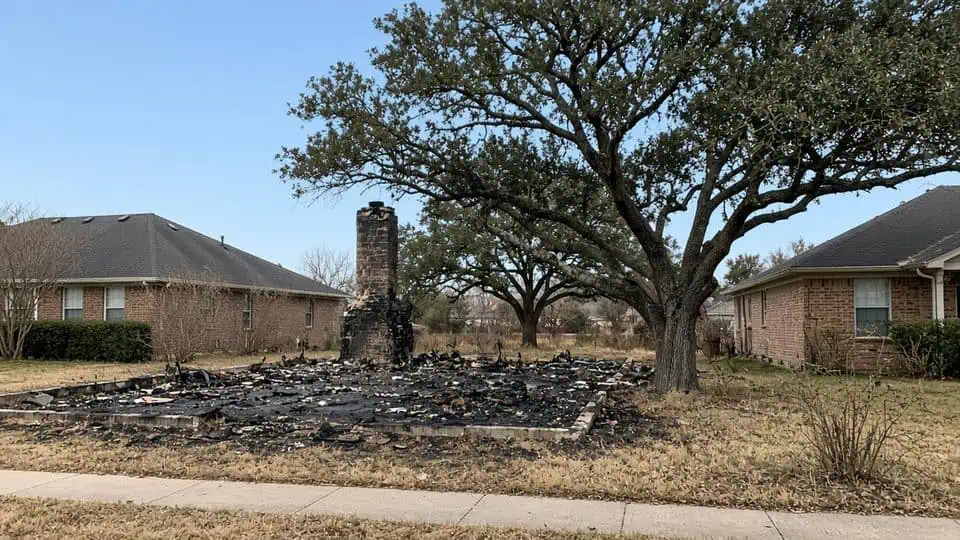
When a fire destroys most of the structure, or the insurer declares a total loss, the house may need to be demolished. You can still sell. In that case you are selling the land, sometimes with the remains of the house still on it. The value comes from the lot itself: its location, size, zoning and the cost of clearing it. You do not need to pay for demolition before selling to a cash buyer, as the cost of clearing the site is built into the offer. If the house is already gone, see how we buy land in Texas.
How A Cash Offer Is Worked Out
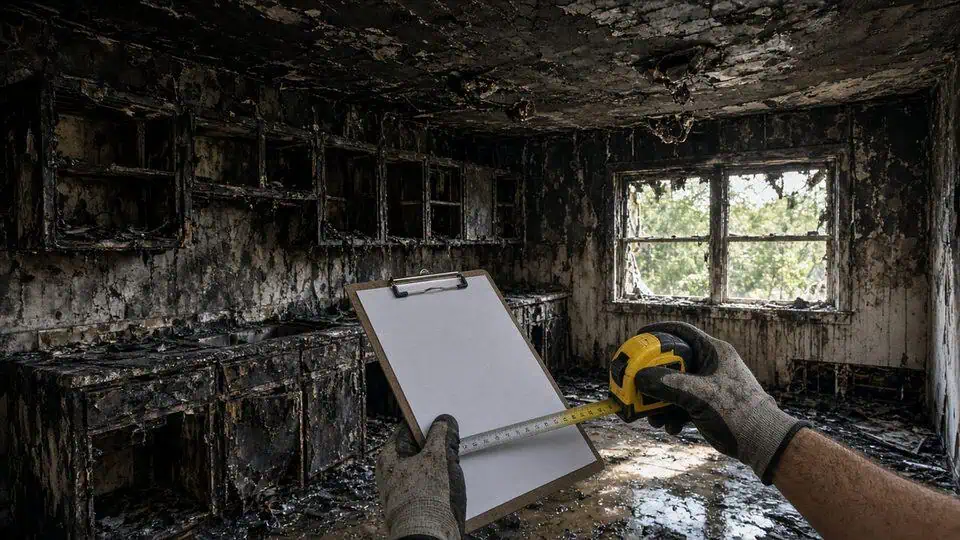
Most sellers want to know what they will get. Every property is different, but a serious cash buyer usually works the offer out like this:
- After-repair value (ARV): what the home would sell for once fully repaired, based on recent sales of similar homes nearby.
- Minus repair and remediation costs: structural repairs, roofing, electrical, smoke and soot cleaning, water and mold remediation, debris removal and permits.
- Minus holding and resale costs: insurance, taxes and utilities while the work is done, plus the cost of selling the finished home.
For a total loss, the land value sets the floor. Even if the structure has no value, the lot still does, minus the cost of demolition and clearing.
Be cautious of any buyer who quotes a fixed percentage before seeing the property. Ask how they reached their number. A clear breakdown is a good sign that the offer is grounded in real costs.
A Recent Fire-Damaged House We Bought In Dallas
Real Example
In October 2026 we bought a severely fire-damaged house in Dallas for $100,000. The fire had done serious damage, but the structure could be saved. Bringing it back took about $140,000 of renovation, including new electrical, a new roof, a new heating and air system, and a complete interior rebuild.
That’s the kind of work most owners don’t want to take on, and it’s why we buy fire-damaged homes as-is. We’ve also helped sellers work through the insurance side of a fire, so they understand how the claim and the sale fit together before they decide.
Want To See The Numbers For Your House?
Tell us about the property and we will walk you through how we reach our figure. Your written offer arrives within 24 hours, and there is no obligation to accept.
How The Cash Sale Process Works
- Share the details. Contact Cash House Buyers USA with the address, the extent of the damage and any known issues such as code notices, liens or an open insurance claim.
- Walkthrough. The team arranges a visit to see the property in person.
- Written offer within 24 hours. The offer reflects the condition of the home, the local market and the cost of the work needed after closing. There is no obligation to accept.
- Closing. If you accept, closing is handled through a local title company on a date agreed between you, the buyer and the title company. Most homes close in 7 to 14 days.
There are no agent commissions and no repair costs, and sellers pay no closing costs. You still pay off your mortgage, any liens and your prorated share of property taxes from the sale proceeds, as you would in any sale. You can read more about how our process works.
Selling as-is also means no listing period, no showings and no waiting for a buyer’s financing. To understand more about selling in any condition, see our sell your home as-is page, or read the key considerations when selling a home as-is before you decide.
Talk To Cash House Buyers USA About Your Fire-Damaged Home
We buy with our own money, so your contract is not passed on to another investor. We buy as-is, you pay no closing costs, and most homes close in 7 to 14 days.
Frequently Asked Questions:
Can I Sell A Fire-Damaged House In Texas Without Making Any Repairs?
Yes. Cash House Buyers USA buys fire-damaged homes in DFW as-is, so you do not need to repair, clean or demolish anything before closing.
Do I Have To Disclose Fire Damage When Selling In Texas?
Generally, yes. Texas Property Code §5.008 requires a Seller’s Disclosure Notice for most single-family homes, and the form asks about previous fires, though some transfers are exempt.
What Happens To My Insurance Payout If I Have A Mortgage?
Your lender is usually a co-payee and may hold the money in a loss-draft account, releasing it as repairs are done or applying it to the loan.
Will I Lose Recoverable Depreciation If I Sell Before Repairing?
Usually, yes. Replacement-cost policies typically pay actual cash value first and release the depreciation holdback only once repairs are completed.
Can I Sell A Fire-Damaged Home If I Owe More Than It Is Worth?
Yes, but you will need to bring cash to closing to cover the shortfall or get your lender’s written approval for a short sale.
Will City Code Violations Stop Me From Selling?
Not necessarily, but rules vary by city and liens or demolition orders under Texas Local Government Code chapter 214 can affect the sale, so disclose every notice.
How Fast Can I Sell A Fire-Damaged House For Cash?
Cash House Buyers USA gives a written offer within 24 hours of seeing the property, and most homes close in 7 to 14 days.
What Areas Does Cash House Buyers USA Serve?
CHB is based in Irving and buys homes across the Dallas-Fort Worth metroplex, including Dallas, Fort Worth, Plano, Arlington and Irving.
Ready To Sell Your Fire-Damaged House In DFW?
Dealing with a fire-damaged property is stressful, but you do not have to manage it alone. Whether you are working through an insurance claim, carrying a mortgage or responding to a city notice, Cash House Buyers USA can help.
We have bought Texas homes since 2011, we buy with our own funds and we pay sellers’ closing costs.
Call (877) 405-9220 or request your cash offer online for a written, no-obligation offer within 24 hours.